Tuesday, November 28, 2017
Russia gate


Sleep of reason
Bertoni Ticino
Denis mack Smith
Séneca
Luke harding Russia
http://www.repubblica.it/static/trust/news/l_intervista_a_luke_harding_sul_russiagate_un_operazione_da_manuale_che_punta_alla_casa_bianca_.html
Monday, November 27, 2017
La última lección de Fernando Savater
La última lección de Fernando Savater
El escritor y filósofo español recibe un homenaje en la que tiene previsto que sea su última visita a la Feria Internacional del Libro (FIL).
Otros
Guadalajara (México) 27 NOV 2017 - 02:50 CET
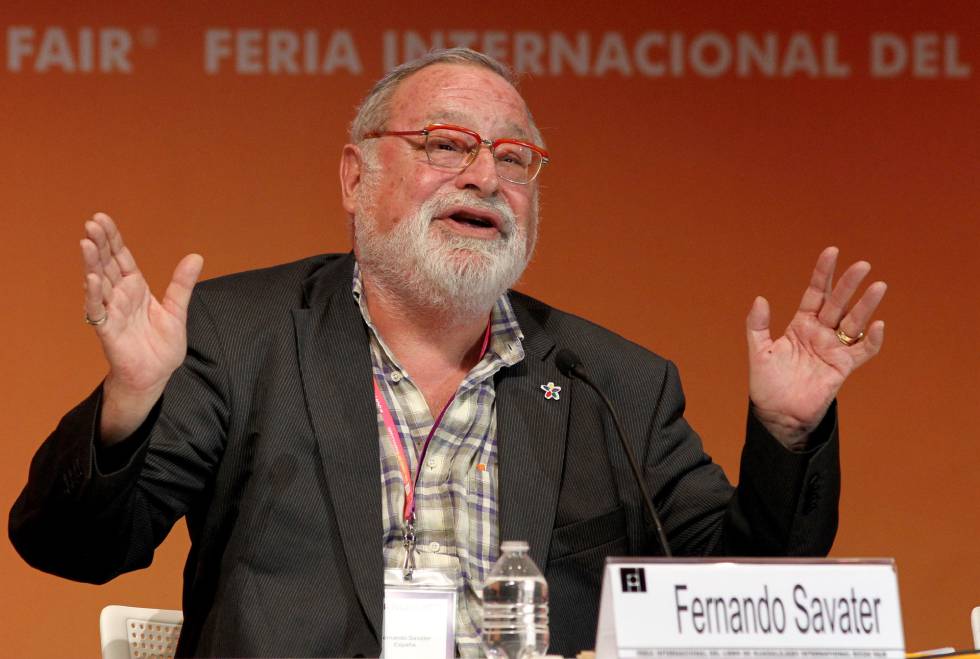 El escritor español Fernando Savater. ULISES RUIZ BASURTO EFE
Fue un homenaje a un maestro. También el agradecimiento a un guía y la rendición de un colmado auditorio ante un superventas. Todo en una misma tarde y todo para Fernando Savater, el filósofo y escritor donostiarra que ha formado a varias generaciones en la lectura y en el pensamiento a ambos lados del Atlántico. Sus lectores en Guadalajara abarrotaron la sala Juan Rulfo para aplaudir de pie al autor de Ética para Amador, quien dijo que esta podría ser su última visita a la Feria Internacional del Libro (FIL).
Savater, que cumplió 70 años en junio, lleva desde marzo de 2015 soportando el vacío que le dejó la muerte de Sara Torres, su esposa, por un tumor cerebral. Esta tarde en Guadalajara nadie de los que acompañaron al filósofo en la mesa la mencionó. No fue necesario. Todos en la sala entendieron el porqué de sus dolidas palabras. “Los monstruos reales llegan para la vida de uno. Yo ya no me siento con fuerzas para hacer las cosas que hice con alegría sin alegría”, dijo.
Savater rememoró uno de sus primeros viajes a la feria de Guadalajara, en 1990. No fue invitado por la organización sino por el poeta Octavio Paz, que lo llamó por teléfono para pedirle un favor. “Estuve el año en que le dieron el Nobel y me llamó para que lo sustituyera. Bueno, no para que lo sustituyera, sino para ocupar el espacio de tiempo que iba a ocupar él”, dijo con humor. “Éramos muy poquitos y en ese entonces nos íbamos a cenar todos juntos”, recordó el escritor con una sonrisa. Segundos después, se rodeó nuevamente de sombras: “Ha muerto también hace poco mi amiga Luz del Amo…en fin”.
Savater trató de distanciarse de la etiqueta de filósofo. Minutos antes, los mexicanos Juan Villoro y Jorge Volpi habían alabado su don para transmitir pensamientos abstractos. “No todos los filósofos tienen la cortesía de ser profundos y, a la vez, claros…”, dijo Villoro, quien es hijo de Luis Villoro, un filósofo reputado pero “sumamente abstracto”. “Savater es un mediador entre las ideas más complejas y la vida de la gente”, agregó.
Para ser un buen maestro hace falta ser ignorante
FERNANDO SAVATER
“Nos cambió la vida”, dijo Volpi quien agradeció a Savater haberle traducido en las obras Panfleto contra el todo y Nihilismo y acción a los grandes nombres de la Filosofía cuando era un estudiante de una preparatoria marista. “Sé que no soy el mismo desde que leí a Nietszche. También sé que no entendí nada de Nietszche hasta leerlo en Fernando Savater”, dijo el autor de En busca de Klingsor. “No solamente tenía a los maestros de la prepa. Había otro maestro al otro lado del océano”.
“Para ser un buen maestro hace falta ser ignorante”, reveló quien fue catedrático de Ética en la Universidad Complutense y en la del País Vasco y quien fue enviado a prisión por sus reiteradas críticas al régimen de Franco. “Los sabios son malos profesores porque no entienden la ignorancia de los demás. Yo comprendo muy bien lo que no comprenden los demás. Cuando voy a explicar algo entiendo lo que se le resiste al otro porque a mí también me ha costado entenderlo”.
Thursday, August 31, 2017
Friday, February 20, 2015
Wednesday, February 11, 2015
is Russia going to wage war against Europe? Pavel Felgenauer / Echo of Moscow
In this interview considerations of brilliant military analyst Pavel Felgenauer , the guy who predicted the invasion of Georgia based on public available information. In summary, what is worrying is not the plan to invade Europe and arrive in Berlin ( a complex task after all) but the attitude of Mr Putin and his top military brass who believe they can do so. This will dictate their decision to stop or not war in Ukraine. Clearly the balance could change if foreign technology were provided to Ukrainians like in Afghanistan not a long time ago when American Stingers were downing soviet fighter jets. The fall of the USSR ensued. This time the trick could be made only with the shipment of non lethal weapons like drones employed by the Russian army in the Donbass to increase the precision and rapidity of Ukrainian attack and defence. And by the way these drones are provided and licensed by Israel like the Mistrals by France, ie foreign agents which Russia wants out of Ukraine.
On a personal note , a new doctrine is being imposed by the Kremlin, self defence of foreign countries is not allowed with the import of new technology. This is clearly against the spirit of competition , not surprising if we think about Russia but also Germany,France and unfortunately the whole of the EU based on that very principle. The crisis was triggered because of the demands of a majority of Ukrainians backed by Brussels to sign an agreement with the EU.
Sunday, February 08, 2015
higher taxes are good
http://www.economist.com/news/finance-and-economics/21642199-behavioural-argument-higher-taxes-no-representation-without-taxation
HOW can poor countries get better gov-ernments? A recent paper* by Lucy
Martin of Yale University suggests higher
taxes could help. Low-income African
countries levy taxes worth about 17% of
GDP each year, whereas the countries of
the European Union take in nearly 40% on
average. In some cases, foreign aid makes
up some of the difference: according to the
IMF it constitutes about 10% of GDP in the
Democratic Republic of Congo. In Liberia
the figure is more like 15%. In 2012 the
whole continent received $51 billion in foreign handouts.
Low taxes and high aid flows, Ms Martin thinks, are a recipe for disengaged citizens and therefore forless effective governments. Her argument hinges on “loss
aversion”, an economic proposition that
the pain of a loss is greater than the pleasure afforded by an equal gain. Most people, the thinking goes, care more about losing what they have than about getting
something extra.
A similar rationale, Ms Martin argues,
applies to aid and taxes. If aid money is siphoned off by corrupt politicians, people
are miffed, but if they discover that their
taxes have suffered the same fate, they are
furious. In other words, taxpayers feel the
loss of money they once had more acutely
than that of funds they might have received. You would therefore expect a hightax country to have more politically engaged citizens and thus better functioning
institutions than one that depended on
aid, even iftheirgovernment budgets were
a similar share ofGDP
seems, make for high civic engagement